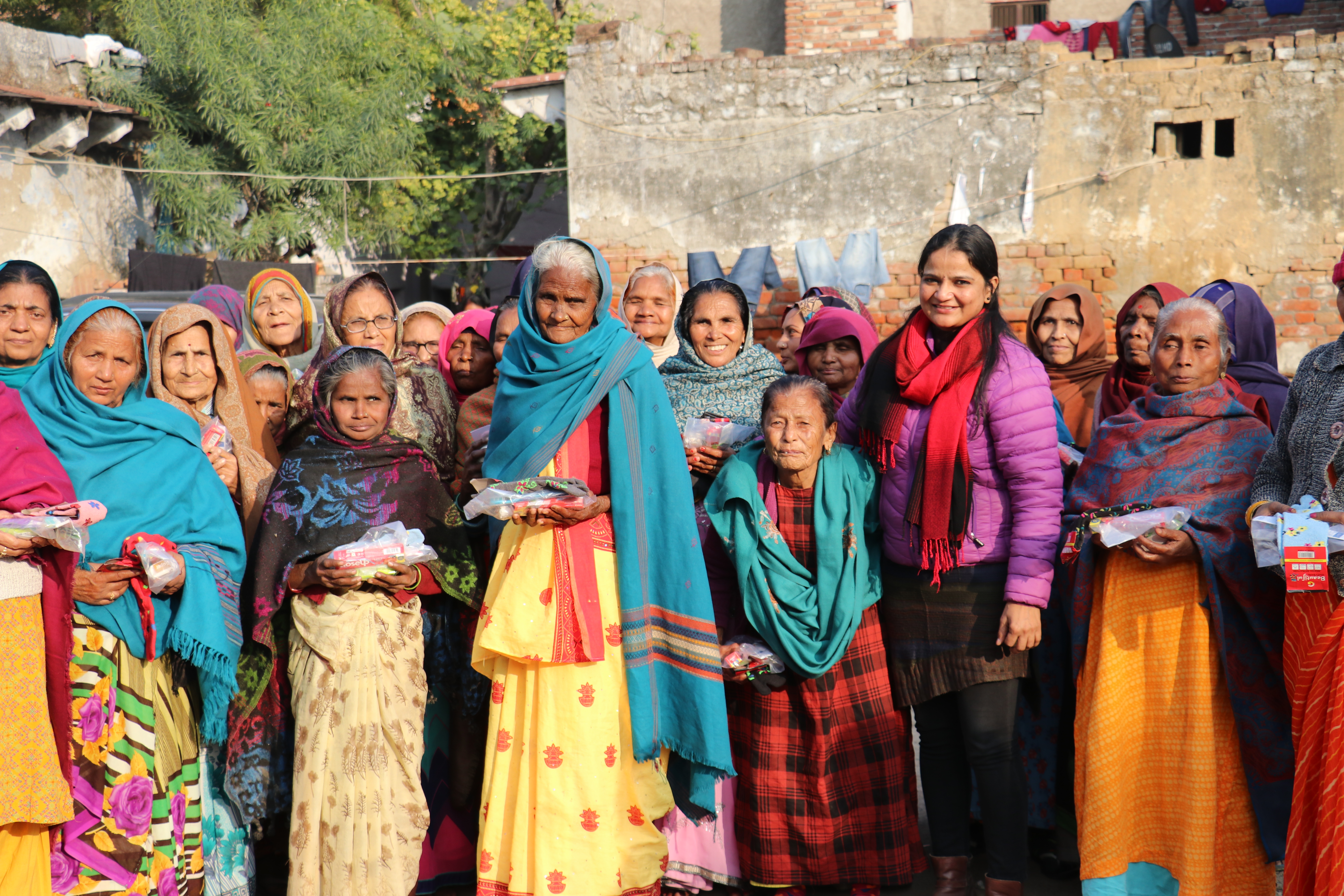
— Jyoti Singh
Raised in Agra, Uttar Pradesh, in a middle-class defencefamily, Jyoti's leadership is shaped by lived experience and sustained engagement with communities navigating structural barriers. Her understanding of inequality is personal and practical.
Her formal journey into social development began in 2007 after completing her Master's in Social Work. What began as community engagement evolved into an 18+ year commitment to strengthening access to education, healthcare, and essential services across urban slums, wards, and gram panchayats.
She is known across communities as "Jyoti Didi." Leadership, for her, is presence—not position.
Jyoti Singh's leadership style is collaborative and grounded in trust. She has worked closely with diverse communities, including Dalit, Muslim, OBC, and other marginalized groups. Her presence is sustained—not project-based. Relationships continue beyond program cycles.
Through Smiley Days, her women-led initiative on menstrual health, she integrates awareness, livelihoods, and leadership development within a community-driven model. The initiative bridges dignity, health education, and economic participation.
Her leadership is defined by:
Partnership over prescription—working with communities, not for them.
Participation over instruction—empowering voices rather than directing them.
Long-term engagement over short-term visibility—building lasting change.
Accountability to communities, not just institutions.
Known as "Jyoti Didi," she remains accessible to the people she works with. Leadership, for her, is not positional—it is relational.
"A future where education, healthcare, and opportunity are accessible with dignity—and communities are confident, informed, and self-reliant."
"Impact, for Jyoti, is measured not only in numbers—but in confidence, continuity, and informed participation."
Through Smiley Days, Jyoti integrates menstrual health awareness with livelihood development.
Mobilized networks during COVID-19 to preserve dignity in emergencies.
Families increasingly investing in girls’ education.
Women speak more confidently about health and rights.
Communities engage more actively with public systems.
Women earn for families through stitching & embroidery.
How Jyoti Singh's grassroots experience shapes her vision for inclusive, dignity-centered development
For Jyoti Singh, inclusive development begins by asking who is still being left behind. Progress matters only when it is felt in everyday access—to education, healthcare, information, and choice.
Her vision focuses on strengthening the last mile by ensuring systems are practical, understandable, and responsive to lived realities.
Communities are not passive recipients of development. When people are respected, informed, and supported, they become active contributors to change.
Jyoti views women's leadership as essential, not symbolic. Representation matters most when women help shape decisions that affect their lives and communities.
Her work emphasizes moving women from participation to leadership through education, health awareness, and livelihood integration.
Leadership grows when women are trusted with responsibility and supported to speak for themselves. Women bring practical wisdom shaped by daily realities.
Leadership is not about visibility—it is about accountability, continuity, and collective progress.
Jyoti's thinking follows a simple progression: dignity leads to participation, and participation leads to change.
When people are treated with respect—when their time, voice, and experience matter—they engage more confidently with systems meant to serve them.
Change often begins quietly:
Dignity is not conferred; it is experienced when people are heard and taken seriously.
Jyoti Singh's work follows a practical sequence: reaching underserved populations, ensuring dignity in service delivery, and enabling active participation.
In the field, this begins with connecting families to education, health, and welfare services in a clear and respectful manner. When services are delivered without bias, trust is built.
This trust leads to participation. Families engage with schools, women access healthcare independently, and communities navigate public systems with confidence.